

If you’ve spent any time online recently, you’ve probably seen the name “semaglutide” everywhere — often under its brand names Ozempic, Wegovy, or Rybelsus. It’s one of the most talked-about medicines in the world right now, praised for helping people manage type 2 diabetes and lose significant amounts of weight.
But what actually is semaglutide, and how does it work inside your body? This guide breaks it down in plain, simple language — no confusing medical jargon — so you can have an informed conversation with your doctor or pharmacist before starting treatment.
Key Takeaways
- Semaglutide is a GLP-1 receptor agonist that helps control blood sugar and reduce appetite.
- It’s sold under three brand names in the US: Ozempic, Wegovy, and (as of 2026) an oral tablet now branded under the Ozempic name, which replaced Rybelsus.
- It’s approved for type 2 diabetes, chronic weight management, and cardiovascular risk reduction.
- Most people lose 10–17% of body weight with sustained use, though results vary.
- Common side effects are nausea, diarrhea, and constipation — usually mild and temporary.
- It should always be used under medical supervision, alongside diet and lifestyle changes.
What Is Semaglutide?
Semaglutide is a man-made version of a natural gut hormone called GLP-1 (glucagon-like peptide-1). This hormone is released after you eat and plays two key roles: it helps your pancreas release the right amount of insulin, and it sends “fullness” signals to your brain.
Semaglutide belongs to a class of medicines called GLP-1 receptor agonists. In simple terms, it mimics your body’s own GLP-1 hormone but stays active in your system for much longer — which is why most forms only need to be taken once a week (injection) or once a day (tablet), rather than multiple times a day.
It was originally developed to treat type 2 diabetes, but researchers noticed that people taking it also lost significant weight — leading to its approval as a dedicated weight-management treatment as well.
How Does Semaglutide Work in the Body?
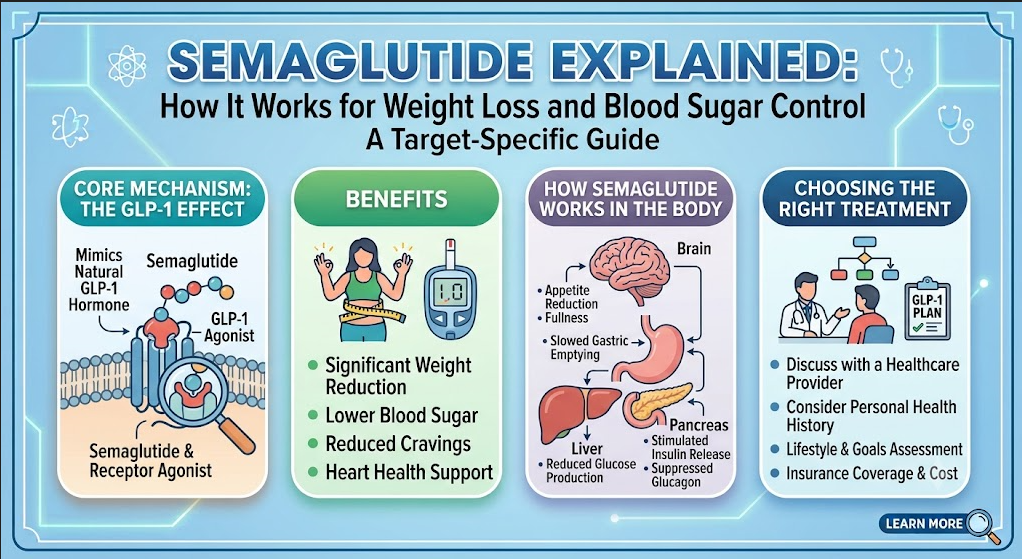
Semaglutide works by attaching to and activating GLP-1 receptors throughout your body, particularly in the pancreas, brain, and digestive system. Here’s what happens step by step:
- It boosts insulin release — but only when your blood sugar is high, which lowers the risk of dangerously low blood sugar (hypoglycemia) compared to some older diabetes medicines.
- It reduces glucagon release — glucagon is a hormone that raises blood sugar, so dialling it down helps keep glucose levels steadier.
- It slows down stomach emptying — food stays in your stomach longer, which helps you feel fuller for longer after meals.
- It acts on appetite centres in the brain — specifically the hypothalamus, reducing hunger signals and food cravings.
How Semaglutide Helps With Blood Sugar Control
For people with type 2 diabetes, semaglutide helps the body respond better to the insulin it already produces and reduces the liver’s tendency to release excess glucose. Over time, this typically lowers HbA1c (a 3-month average blood sugar measurement) and helps keep blood sugar levels more stable throughout the day.
How Semaglutide Helps With Weight Loss
For weight loss, the appetite-suppressing and stomach-emptying effects are the main drivers. By reducing hunger and helping you feel satisfied with smaller portions, semaglutide makes it easier to maintain a calorie deficit — which ultimately leads to fat loss — without the constant battle with hunger that many people experience on standard diets.
Semaglutide Brand Names: Ozempic, Wegovy, and the New Oral Tablet
Because semaglutide is approved for various uses and comes in different forms, it’s sold under several brand names. This has caused some confusion, especially with recent changes, so here’s a simple breakdown:
| Brand Name | Form | Primary Approved Use |
| Ozempic | Weekly injection | Type 2 diabetes management; cardiovascular risk reduction |
| Ozempic tablet (formerly marketed as Rybelsus) | Daily oral tablet | Type 2 diabetes management; cardiovascular risk reduction |
| Wegovy | Weekly injection | Chronic weight management; cardiovascular risk reduction |
| Wegovy tablet | Daily oral tablet | Chronic weight management (newly approved oral option) |
Important: these products are not interchangeable on a milligram-for-milligram basis, even when they share the same active ingredient. The dose, formulation, and approved uses differ for each, so never switch between them without your prescriber’s guidance.
It’s also worth knowing that generic semaglutide is on the horizon in several countries as manufacturing patents begin to expire, which may make treatment more affordable over the next few years. In the meantime, always source semaglutide products from licensed pharmacies rather than unverified compounded versions, since the FDA has noted that compounded semaglutide salts have not been evaluated for safety and effectiveness.
Who Can Benefit From Semaglutide?
Type 2 Diabetes
Semaglutide is approved as an add-on to diet and exercise to improve blood sugar control in adults with type 2 diabetes. It’s often considered when metformin alone isn’t providing enough control, though newer approvals also support its use earlier in treatment for some patients.
Weight Management
Semaglutide (under the Wegovy brand) is approved for adults with:
- A BMI of 30 or higher (classified as obesity), or
- A BMI of 27 or higher (overweight) with at least one weight-related health condition, such as high blood pressure, high cholesterol, or type 2 diabetes
Cardiovascular Risk Reduction
More recent approvals also recognise semaglutide’s role in reducing the risk of major cardiovascular events — such as heart attack and stroke — in adults with type 2 diabetes or with obesity/overweight who already have established heart disease.
Other Emerging Uses
Semaglutide injection has also received approval for MASH (metabolic dysfunction-associated steatohepatitis, a form of liver disease linked to obesity), reflecting how connected weight, blood sugar, heart health, and liver health really are.
How Is Semaglutide Taken?
Semaglutide comes in two forms, and how you take it depends on which one your doctor prescribes:
Injectable semaglutide (Ozempic, Wegovy):
- Given once weekly, on the same day each week
- Injected under the skin (subcutaneously) in the abdomen, thigh, or upper arm
- Comes in a pre-filled pen device designed for easy self-injection
- The dose is gradually increased over several weeks to reduce stomach-related side effects
Oral semaglutide tablet:
- Taken once daily, first thing in the morning
- Must be taken on an empty stomach, with no more than 4 oz (about 120 ml) of plain water
- You must wait at least 30 minutes before eating, drinking anything else, or taking other oral medications
- Skipping this step significantly reduces how much of the medicine your body actually absorbs
Your doctor will typically start you on a low dose and increase it gradually — this “dose escalation” approach is one of the most effective ways to minimise nausea and other digestive side effects.
What Results Can You Expect?
Results vary from person to person depending on dose, treatment duration, diet, activity level, and individual biology. That said, clinical trial data give a useful general picture:
- People using semaglutide for weight management have lost an average of 10–17% of their starting body weight over 64–68 weeks of treatment, when combined with diet and exercise support.
- For blood sugar control, many people see meaningful reductions in HbA1c within the first 3–6 months.
- Weight loss and blood sugar improvements tend to plateau after around a year, and results are generally not maintained if the medicine is stopped without other lifestyle support in place.
It’s important to set realistic expectations: semaglutide is a tool that works best alongside — not instead of — healthier eating habits and regular movement.
Common Side Effects and Precautions
Like all medicines, semaglutide can cause side effects. Most are related to the digestive system and tend to improve over time as your body adjusts.
Common side effects include:
- Nausea
- Diarrhoea or constipation
- Vomiting
- Stomach pain or bloating
- Reduced appetite
- Headache
- Fatigue
Less common but more serious risks include:
- Acute pancreatitis (inflammation of the pancreas)
- Gallbladder problems
- Kidney problems related to dehydration from vomiting or diarrhoea
- Diabetic retinopathy complications in people with existing diabetic eye disease
- Delayed stomach emptying, which can affect people undergoing surgery or procedures requiring anaesthesia
Boxed warning: Semaglutide carries an FDA boxed warning regarding the risk of thyroid C-cell tumours seen in animal studies. It should not be used by anyone with a personal or family history of medullary thyroid carcinoma or a condition called Multiple Endocrine Neoplasia syndrome type 2 (MEN 2).
This isn’t a reason to panic, but it is a reason to have an open conversation with your doctor about your personal and family medical history before starting treatment.
Who Should Avoid Semaglutide?
Semaglutide may not be suitable for everyone. Your doctor may advise against it, or monitor you more closely if you have:
- A personal or family history of medullary thyroid carcinoma or MEN 2 syndrome
- A history of pancreatitis
- Severe gastrointestinal disease, such as gastroparesis
- Known hypersensitivity to semaglutide or any ingredient in the formulation
- Type 1 diabetes (semaglutide is not approved or recommended for this)
Is Semaglutide Safe During Pregnancy or for Older Adults?
Pregnancy and breastfeeding: Semaglutide is generally not recommended during pregnancy. Weight loss provides no benefit to a pregnant individual and semaglutide may cause harm to the fetus, so it’s typically advised to stop the medicine at least two months before planning a pregnancy. If you’re pregnant, planning to become pregnant, or breastfeeding, speak with your doctor about alternative approaches.
Older adults: Semaglutide can be used by older adults, and clinical trials have included this age group. However, older adults may be more sensitive to side effects like nausea, dehydration, or reduced appetite, so dose adjustments and closer monitoring are sometimes recommended.
Lifestyle Tips to Get the Most Out of Semaglutide
Semaglutide works best as part of a complete approach to health, not as a standalone fix. Consider these habits alongside treatment:
- Eat balanced, smaller meals — protein and fibre-rich foods help you feel satisfied longer and support muscle mass during weight loss.
- Stay hydrated — this helps manage constipation and reduces the risk of dehydration-related side effects.
- Eat slowly — since semaglutide slows digestion, eating quickly can worsen bloating or nausea.
- Stay physically active — regular movement supports weight loss, protects muscle mass, and benefits heart health.
- Avoid high-fat, greasy meals early in treatment — these can worsen nausea while your body adjusts to the medicine.
- Track your progress with your care team — regular check-ins enable dose adjustments and help catch side effects early.
Semaglutide vs Other GLP-1 Medicines: How Does It Compare?
Semaglutide isn’t the only GLP-1-based medicine available. Here’s a simplified comparison to help you understand where it fits:
| Medicine | Active Ingredient | Dosing | Primary Use |
| Ozempic / Wegovy | Semaglutide | Weekly injection | Diabetes / Weight management |
| Ozempic tablet | Semaglutide | Daily oral tablet | Diabetes |
| Mounjaro / Zepbound | Tirzepatide | Weekly injection | Diabetes / Weight management |
| Trulicity | Dulaglutide | Weekly injection | Diabetes |
| Victoza | Liraglutide | Daily injection | Diabetes |
| Saxenda | Liraglutide | Daily injection | Weight management |
Each medicine has its own dosing schedule, approved uses, and side-effect profile. Your doctor can help determine which option best matches your health goals, insurance coverage, and personal preferences.
Can I Buy Semaglutide Online?
Semaglutide is a prescription-only medicine in the USA, UK, and Australia. This means you’ll need a valid prescription from a licensed healthcare provider before it can be legally dispensed — whether from a local pharmacy or a licensed online pharmacy.
If you’re considering ordering online, look for pharmacies that:
- Require a valid prescription
- Are licensed and verifiable in your country or state
- Provide clear information about the manufacturer and batch/authenticity of the product
- Offer access to a licensed pharmacist for questions
Avoid sources offering semaglutide “without a prescription” or unusually cheap compounded versions with unclear ingredient sourcing, as product safety and accuracy cannot be guaranteed in these cases.
When to See a Doctor
Reach out to your healthcare provider promptly if you experience:
- Severe or persistent abdominal pain (which could signal pancreatitis)
- Signs of an allergic reaction, such as swelling of the face, lips, or throat, or difficulty breathing
- A lump or swelling in your neck, hoarseness, or difficulty swallowing
- Vision changes, especially if you have existing diabetic eye disease
- Signs of dehydration, such as dizziness, reduced urination, or a rapid heartbeat
- Symptoms of very low blood sugar (shakiness, confusion, sweating) if you’re also taking insulin or other diabetes medicines
Frequently Asked Questions
- What is semaglutide used for? Semaglutide is used to improve blood sugar control in adults with type 2 diabetes and to support long-term weight management in adults with obesity or overweight with a related health condition. It’s also approved to reduce the risk of major cardiovascular events, such as heart attack and stroke, in certain adults with heart disease.
- How does semaglutide cause weight loss? Semaglutide slows down stomach emptying and acts on appetite centres in the brain, making you feel fuller for longer and reducing overall food intake. Combined with a reduced-calorie diet and physical activity, this typically leads to gradual, sustained weight loss over several months.
- Is semaglutide the same as Ozempic? Semaglutide is the active ingredient, while Ozempic, Wegovy, and the newer oral tablet are brand names for formulations that contain semaglutide. Each brand is approved for slightly different uses and comes in different doses, so they aren’t automatically interchangeable.
- How long does it take for semaglutide to work? Some people notice reduced appetite within the first few weeks, while meaningful weight loss and blood sugar improvements usually build gradually over 3 to 6 months. Maximum results are typically seen after 12 months or more of consistent use combined with lifestyle changes.
- What are the most common side effects of semaglutide? The most common side effects are nausea, diarrhoea, constipation, vomiting, and stomach discomfort. These are usually mild to moderate, tend to occur when starting or increasing the dose, and often improve as your body adjusts over a few weeks.
- Is semaglutide safe for long-term use? Clinical trials have followed patients for up to two years, showing a generally consistent safety profile with continued use. Long-term treatment should always be monitored by a healthcare provider, particularly to track thyroid health, kidney function, and any digestive symptoms.
- Can semaglutide be used without diabetes, just for weight loss? Yes. Under the Wegovy brand, semaglutide is specifically approved for chronic weight management in adults without diabetes, provided they meet the BMI and health-condition criteria set out for this use.
- Is semaglutide safe during pregnancy? Semaglutide is not recommended during pregnancy, as it hasn’t been shown to be safe for a developing fetus and offers no benefit during this time. It’s generally advised to stop semaglutide at least two months before trying to conceive.
- Can older adults use semaglutide? Yes, semaglutide can be used by older adults and has been studied in this age group. However, older adults may be more prone to side effects like dehydration or reduced appetite, so your doctor may monitor you more closely or adjust your dose.
- What happens if I stop taking semaglutide? Most people who stop semaglutide gradually regain some of the weight they lost and may see blood sugar levels rise again, particularly if lifestyle changes aren’t maintained. This is why ongoing lifestyle support is an important part of long-term treatment planning.
- Can I drink alcohol while taking semaglutide? There’s no direct dangerous interaction between semaglutide and moderate alcohol use, but alcohol can worsen nausea and stomach upset and may affect blood sugar levels in people with diabetes. It’s best to discuss your alcohol habits with your doctor.
- Does semaglutide interact with other medications? Semaglutide can affect how quickly other oral medications are absorbed, due to its effect on stomach emptying, and may increase the risk of low blood sugar when combined with insulin or certain other diabetes medicines. Always share a full list of your current medications with your prescriber.
- Can I buy semaglutide online without a prescription? No. Semaglutide is a prescription-only medicine in the USA, UK, and Australia, and legitimate pharmacies will always require a valid prescription before dispensing it, whether in person or online.
- What’s the difference between Ozempic and Wegovy if they’re both semaglutide? Ozempic and Wegovy contain the same active ingredient but are approved for different primary uses, come in different maximum doses, and are typically covered differently by insurance depending on whether the prescription is for diabetes or weight management.
Semaglutide has genuinely changed how doctors approach type 2 diabetes and weight management, offering a science-backed option for people who have struggled to see results with diet and exercise alone. Mimicking a natural gut hormone helps regulate blood sugar, reduce appetite, and support meaningful, sustained weight loss for many people.
That said, it’s not a one-size-fits-all solution, and it works best when combined with healthy lifestyle habits and regular medical supervision. If you think semaglutide might be right for you, the best next step is an honest conversation with your doctor or pharmacist about your health history, goals, and which treatment option best fits your needs.
This article is for general educational purposes only and is not a substitute for professional medical advice. Always consult a qualified healthcare provider before starting, stopping, or changing any medication.