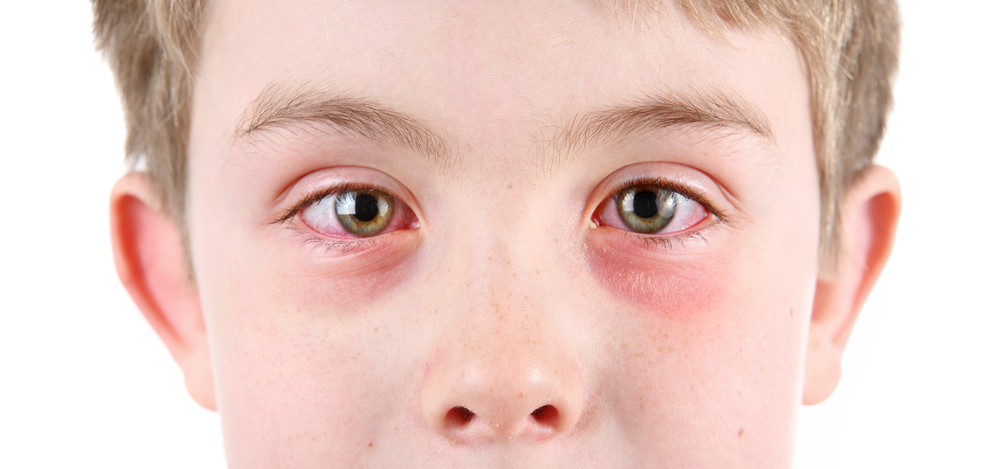


Bloating on face can affect anyone at any time; it is a common concern. Many of you may look in the mirror after waking up in the morning, wondering, “Why is my face bloated?” Facial puffiness can make your features look tired, swollen, and less aligned. Occasional facial bloating doesn’t harm and resolves on its own, but a persistent one may indicate health issues or lifestyle factors. Understanding the causes of face bloating and learning how to reduce face bloating naturally can help you achieve a refreshed, better appearance.
This page will help you learn how to get rid of puffy face fast, face bloating causes and more.
What is face bloating?
Face bloating is characterized by swelling or puffiness in the cheeks, jawline, under-eye area, and sometimes the entire face. This condition usually happens due to fluid retention, inflammation, or changes in circulation. The accumulation of excess fluid in facial tissues can lead to facial bloating, which can feel tight or uncomfortable. In most cases, bloating on face is temporary and resolves within a few hours. However, if face swelling persists for days or occurs frequently, it is important to evaluate possible triggers.
Face bloating causes
Some of the common causes of face bloating are:
-
- Salt consumption – Excessive salt intake is among the most common causes of bloating. Sodium plays a major role in regulating fluid balance in our bodies. Our bodies retain water to balance sodium levels when we consume high amounts of processed or salty foods. The water retention process often appears as bloating on the face and in other areas, such as the hands and feet. One high-salt meal can cause noticeable facial bloating the next morning. You can significantly reduce facial bloating caused by salt by drinking more water and reducing your sodium intake.
- Dehydration – Dehydration is another surprising reason for face swelling. Many individuals ask, “Why is my face bloated even though I don’t eat much salt?” The answer could be insufficient water intake. When our body does not get enough hydration, it goes into conservation mode and holds onto fluids, which leads to facial bloating. Drinking adequate water throughout the day helps flush out excess sodium and toxins, preventing bloating on face and improving overall skin health.
- Alcohol – Alcohol consumption is a major contributor to face bloating. As we know, alcohol dehydrates the body, disrupts sleep, and triggers inflammation, causing facial bloating, especially around the eyes and cheeks. After a night of drinking, many people notice puffiness on their face or under their eyes the next day. Limiting alcohol intake and rehydrating properly can help reduce face swelling quickly.
- Sleep – Poor sleep quality is another overlooked cause of facial bloating. When we don’t get enough restful sleep, our bodies produce higher levels of cortisol, the stress hormone. Elevated cortisol can cause inflammation and fluid retention, leading to bloating on face. Additionally, lying flat for long hours allows fluid to accumulate in facial tissues, which is why many people wake up with a puffy face. Elevating your head slightly while sleeping can prevent fluid from pooling and help reduce face bloating in the morning.
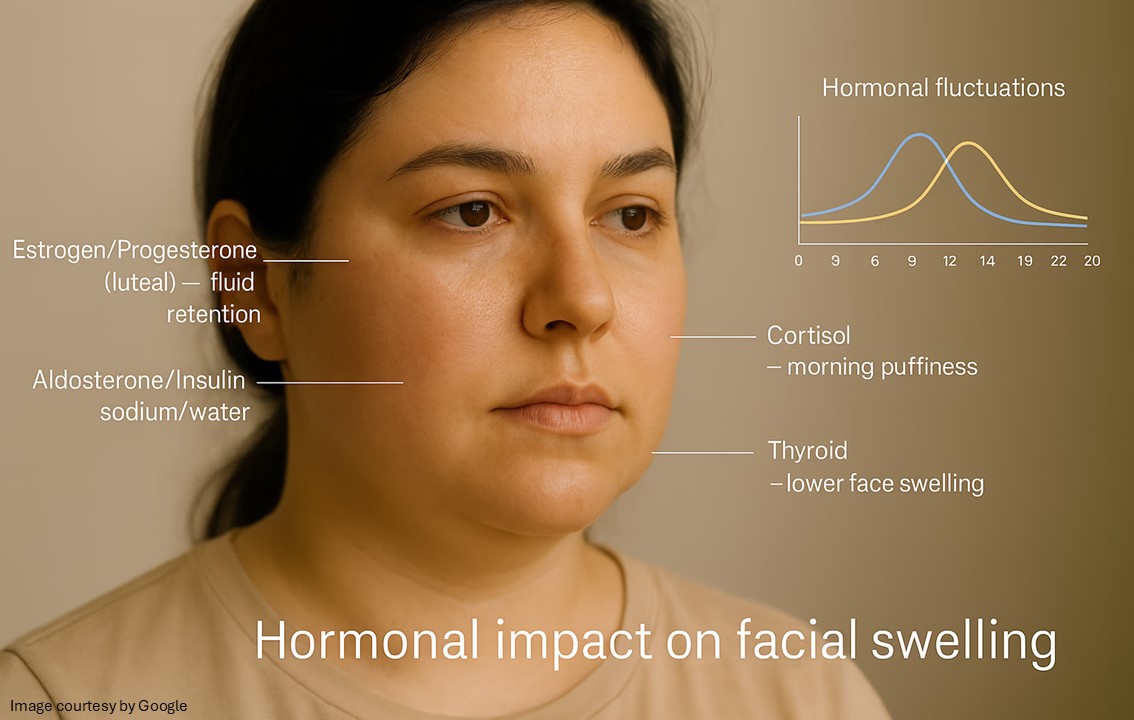
- Hormones – Hormonal changes are also a significant cause of bloating, especially in women. Fluctuations during menstruation, pregnancy, or menopause can cause water retention and inflammation. Thyroid imbalances can also contribute to chronic face swelling.
- Allergy – Allergies can also trigger facial bloating. Allergic reactions to food, pollen, dust, or skincare products can cause inflammation and visible face swelling, particularly around the eyes and lips. In some cases, bloating on face due to allergies may be accompanied by itching, redness, or nasal congestion. Identifying and avoiding allergens is essential to prevent recurring facial bloating.
- Stress – Stress is a common factor in many health problems, including bloating on face. It can silently contribute to this problem. Chronic stress elevates cortisol levels, which promotes water retention and inflammation throughout the body. Over time, this can lead to persistent facial bloating. Stress can be managed through meditation, exercise, or relaxation techniques, which can support hormonal balance and reduce face swelling naturally.
Remedies to get rid of face bloating and puffiness
-
- Lifestyle habits – Lifestyle adjustments are the most effective way to reduce facial bloating. Increasing water intake is one of the simplest and most powerful remedies to start. Proper hydration supports kidney function and prevents fluid retention. Sufficient hydration also reduces intake of processed foods, and limiting sodium can dramatically decrease facial bloating within a few days. Add potassium-rich foods like bananas, spinach, and avocados into your diet to balance sodium levels and reduce facial bloating.
- Physical activity – Physical activity plays an important role in reducing facial swelling. Exercise improves blood circulation and promotes sweating, which helps eliminate excess fluids. Even light cardio, such as a brisk walk, can help.
- Massage – Facial massage also helps to reduce face bloating. Gentle lymphatic drainage massage encourages fluid movement and reduces puffiness. Using tools like a jade roller or gua sha can enhance circulation and improve facial definition. Many people notice immediate improvement in facial bloating after a few minutes of massage. Consistency is key for long-term results.
- Cold therapy – This therapy works wonders when you need quick results. Applying a cold compress, ice pack, or chilled spoons to the face constricts blood vessels and reduces inflammation. This method is one of the fastest ways to get rid of a puffy face because it temporarily tightens the skin and reduces facial Splashing cold water on your face in the morning can also help reduce bloating instantly.
- Diet – Dietary improvements are important for long-term prevention of facial bloating. Reducing refined carbohydrates and sugary foods can help minimize inflammation. Eating whole, nutrient-dense foods supports balanced hormones and healthy circulation. Including anti-inflammatory foods such as berries, fatty fish, turmeric, and green tea may reduce chronic face bloating over time.
- Body posture – Proper posture and sleep positioning also matter. Sleeping on your back with your head slightly elevated can prevent fluid from settling in your face. Changing pillowcases regularly and maintaining good skincare hygiene can reduce inflammation that may contribute to facial bloating. Small adjustments can make a noticeable difference.
Consulting a doctor is important if you don’t get any help from the above tips. Persistent face swelling could also be a sign of thyroid disorders, kidney problems, sinus infections, or other medical conditions. Sudden, severe facial bloating accompanied by breathing difficulty requires immediate medical attention, as it may signal an allergic reaction.
Take away!
Bloating on face is common and usually temporary, but it can severely impact the confidence and self-image of the sufferer. By adopting healthy daily habits and addressing underlying triggers, one can easily reduce facial bloating naturally and maintain a refreshed, defined look.
Understanding the causes of face bloating empowers you to take control of your health and appearance. Whether it is excess salt, dehydration, hormonal changes, alcohol, allergies, or stress, identifying the root cause is the first step toward lasting improvement. If you need immediate relief, cold therapy, hydration, and light exercise can help you get rid of a puffy face fast. With proper care and attention, face swelling can be minimized, helping you feel more comfortable and confident. Visit a doctor to seek further help if natural remedies doesn’t work.