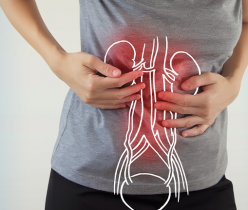


Sudden pain in the abdomen, back, or side can have many causes, including kidney stones and gallstones. Although both involve stones, they form in completely different organs and usually produce different patterns of discomfort. Understanding the difference between kidney stones and gallstones can help you recognize possible warning signs, but symptoms alone cannot confirm the diagnosis. Kidney stones form in the urinary system, while gallstones develop inside the gallbladder. Knowing where the pain starts, what symptoms appear with it, and whether food or urination affects the episode can provide useful clues.
Kidney Stones vs Gallstones: What is the difference?
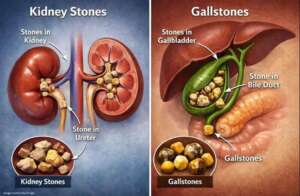
Kidney stones are hard deposits made from minerals and salts that form inside the kidneys. They may remain there or travel through the ureter, the narrow tube that carries urine to the bladder. A stone can become painful when it moves or blocks normal urine flow. Gallstones are solid particles that develop inside the gallbladder. They are commonly made from cholesterol or bilirubin. Some cause no symptoms at all, while others can block a bile duct and trigger a painful gallbladder attack.
Because the affected organs have different functions, the symptoms are often different too.
5 hidden clues that may help you tell them apart
1. Look at where the pain starts
If you are asking where does kidney stone pain occur, it most commonly begins in the back or side, particularly below the ribs. As the stone moves through the urinary tract, discomfort may travel toward the lower abdomen or groin. The pain can be severe and may come in waves. In comparison, where does gallstone pain occur? Gallstone discomfort usually develops in the upper-right abdomen or sometimes the upper-middle abdomen. It may spread toward the back or right shoulder and can continue for several hours. A simple way to remember the typical patterns is:
Kidney stone: back or side → lower abdomen → groin
Gallstone: upper-right abdomen → back or right shoulder
Pain location helps, but it cannot determine which condition is responsible.
2. Urinary symptoms favour a kidney stone
Urinary changes are an important distinction when comparing kidney stone symptoms vs gallstone symptoms. A kidney stone may cause painful urination, frequent urges to urinate, reduced urine output, or blood in the urine. Some people may notice cloudy or unusually strong-smelling urine. These symptoms can occur when a stone irritates or obstructs the urinary tract. Gallstones do not normally cause burning urination or urinary urgency. However, a stone blocking the bile duct can cause jaundice and may make urine appear unusually dark. Pale stools can also occur when bile flow is obstructed. Therefore, back or side pain combined with blood in the urine or painful urination more strongly suggests a urinary problem and warrants medical evaluation.
3. Nausea does not tell them apart
Both conditions can cause digestive symptoms, making kidney stones and nausea symptoms easy to confuse with gallbladder problems. A kidney stone may trigger nausea or vomiting, particularly when the pain becomes intense. Similarly, gallstones and nausea symptoms can occur during a gallbladder attack, with vomiting sometimes accompanying upper abdominal pain. The key is to consider nausea alongside other symptoms. Severe flank pain with urinary changes is a different pattern from upper-right abdominal pain and nausea following a heavy meal. Nausea alone cannot determine whether the problem is a kidney stone or gallstone.
4. Think about the timing of the pain
Meal timing may provide another clue. Gallbladder attacks can occur after eating, especially following a heavy meal, and may happen during the evening or at night. The gallbladder releases bile during digestion, and a blockage can cause pain. Kidney stone attacks don’t have the same typical connection to eating. Their symptoms are more closely linked to the stone moving through or blocking the urinary tract. However, pain after eating does not automatically mean gallstones. Indigestion, reflux, ulcers, pancreatitis, and other digestive problems can cause similar discomfort.
5. Watch for associated warning signs
Accompanying symptoms can provide another important clue. Kidney stones may cause blood in the urine, painful urination, difficulty passing urine, nausea, vomiting, fever, or chills. Fever and chills are particularly concerning when urinary obstruction may be present because an infection can become serious. Gallstone complications may cause persistent abdominal pain, fever, chills, vomiting, jaundice, dark urine, or pale stools. These signs can occur when a gallstone blocks a bile duct or contributes to inflammation or infection. Severe pain accompanied by fever, repeated vomiting, jaundice, inability to urinate, or significant bleeding requires prompt medical attention.
Kidney stone pain vs Gallstone pain
The difference between kidney stone pain vs gallstone pain is easier to understand when you consider the full symptom pattern. Kidney stone pain generally involves the back or side and may move toward the lower abdomen or groin. Urinary symptoms may occur at the same time. Gallstone pain more often affects the upper-right abdomen and can extend toward the back or right shoulder. It may follow a meal and last for several hours, with nausea or vomiting sometimes occurring alongside it. Because several other medical conditions can cause similar pain, view these patterns as clues rather than a diagnosis.
How to tell kidney stones from gallstones?
If you are wondering how to tell kidney stones from gallstones, doctors use medical history, physical examination, laboratory testing, and imaging. For suspected kidney stones, urine and blood tests can help assess the urinary system, while imaging can locate a stone and determine whether it is causing an obstruction. For suspected gallstones, doctors may use blood tests and imaging to evaluate the gallbladder and bile ducts. Ultrasound is commonly used to detect gallstones. Proper testing matters because appendicitis, urinary infections, pancreatitis, ulcers, and other conditions can cause overlapping symptoms.
How are kidney stones treated?
Kidney stone treatment depends on the stone’s size, location, composition, and whether it is blocking urine flow. Some smaller stones pass naturally. Depending on the patient’s condition, a healthcare professional may recommend appropriate fluid intake and pain management. Larger or obstructing stones may require procedures to break up or remove them. In some cases, doctors may prescribe certain medicines. Tamsulosin, for example, has been studied for helping some ureteral stones pass, but it is not appropriate for every patient or every stone. Therefore, choose medication based on medical advice, not symptoms alone.
How are gallstones treated?
Gallstone treatment is different. Gallstones that cause no symptoms may not require treatment. When they repeatedly cause symptoms or complications, surgical removal of the gallbladder, called cholecystectomy, is commonly used. In selected patients, medicines such as ursodiol may be considered for certain cholesterol gallstones. If a stone becomes trapped in the common bile duct, doctors may use an endoscopic procedure such as ERCP to remove it.
This difference in treatment highlights why knowing which type of stone is involved is important.
Can you have kidney stones and gallstones together?
Yes. Since kidney stones and gallstones form in separate organs, a person can have both conditions. However, right-sided abdominal pain does not automatically mean gallstones, and back pain does not always indicate a kidney stone. Other urinary, digestive, and abdominal conditions can produce similar symptoms.
Best kidney stone medicines online
Buying medicines from a reputable online pharmacy can make the ordering process more convenient, especially for people who prefer home delivery. ReliableRxPharmacy (RRx) offers a broad selection of prescription and healthcare products, allowing customers to browse medicines online and place orders without visiting a physical store. For readers looking for related medicines or bladder prostate medicines, RRx offers Udinol 150 mg and Udinol 300 mg, which contain ursodeoxycholic acid and may be prescribed in selected cases of cholesterol gallstones. For urinary medicines, Urimax 0.4 mg contains tamsulosin and is primarily used for urinary symptoms associated with an enlarged prostate; tamsulosin may also be prescribed in selected cases of ureteral stones, but it should not be self-used for kidney stones.
Final takeaway
Understanding kidney stones vs gallstones starts with looking at the location of pain and the symptoms that occur alongside it. Kidney stones are more commonly associated with back or side pain that can move toward the lower abdomen or groin, together with urinary changes. Gallstones more often cause upper-right abdominal pain that may occur after eating and can be accompanied by nausea or vomiting. These clues can help you recognize the difference, but they cannot replace professional diagnosis. If you develop severe abdominal, back, or side pain, appropriate testing can determine whether the cause is a kidney stone, gallstone, or another medical condition.
FAQs
1.How can you tell if pain is from a kidney stone or gallstone?
Kidney stone pain usually starts in the back or side and may move toward the groin. Gallstone pain typically affects the upper-right abdomen and may radiate to the shoulder.
2. Where does kidney stone pain usually occur?
Kidney stone pain commonly occurs in the back or side below the ribs. As the stone moves through the urinary tract, discomfort may spread toward the lower abdomen or groin.
3.Where does gallstone pain usually occur?
Gallstone pain usually occurs in the upper-right abdomen or upper-middle abdomen. It may spread toward the back or right shoulder and can persist for several hours.
4. Can kidney stones cause pain under the ribs?
Yes, kidney stones can cause severe pain in the side or back below the ribs. The discomfort may move downward toward the lower abdomen, pelvis, or groin.
5. Can gallstones cause back or shoulder pain?
Yes, gallstone pain can radiate from the upper-right abdomen toward the back or right shoulder. This referred pain commonly occurs during a symptomatic gallbladder attack.
6.What are the early warning signs of kidney stones?
Early kidney stone symptoms may include sharp side or back pain, blood in the urine, painful urination, frequent urination, nausea, or an urgent need to urinate.
7. What are the hidden symptoms of gallstones?
Gallstones may remain symptom-free. When symptoms develop, they can include upper-right abdominal pain, nausea, vomiting, indigestion, or pain that spreads to the back or right shoulder.
8. How are kidney stones and gallstones diagnosed?
Doctors diagnose kidney stones using medical history, urine and blood tests, and imaging. Doctors evaluate gallstones through examination, blood tests, and imaging, most commonly ultrasound.